Photographing Uncontrolled Environments: What Actually Matters
These are places where nothing pauses for your convenience. People move according to their own needs. Light changes without warning. Interactions begin and end without regard for your framing or intent. You are not directing events — you are observing them while trying to make decisions fast enough that they still matter.
This is why progress in uncontrolled environments often feels slow, frustrating, or inconsistent. Techniques that seem reliable in controlled settings fall apart when variables multiply. Advice that sounds sensible online fails the moment real conditions refuse to cooperate.
What separates photographers who improve in these environments from those who stall is not speed, confidence, or gear. It is judgement — the ability to decide what deserves attention, what does not, and when to act versus when to let a situation go.
This article focuses on those decisions. Not how to set your camera. Not how to “capture the moment.” But what actually matters when you are photographing situations you cannot control.
What Makes an Environment Truly Uncontrolled
An uncontrolled environment is not defined by chaos or intensity. It is defined by authority.
In an uncontrolled environment, you do not have the authority to shape what happens next.
You cannot decide:
- where people move
- when interactions begin or end
- how long a gesture lasts
- what enters or exits your frame
- when light appears, disappears, or shifts direction
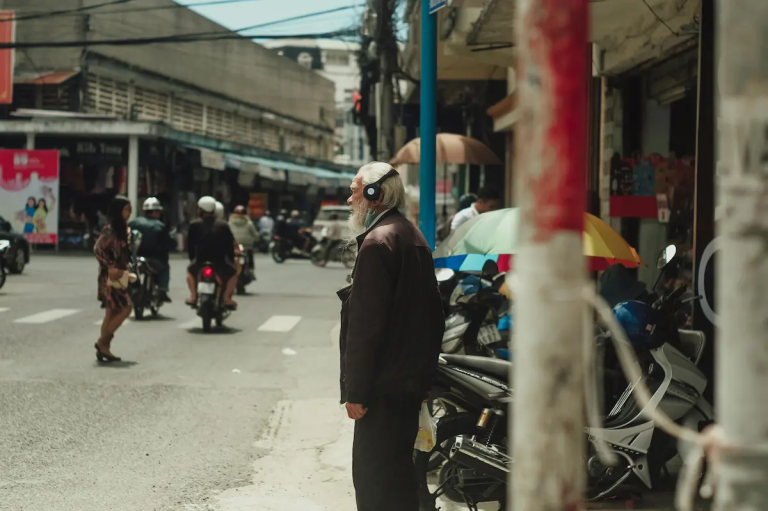
This includes streets, markets, travel situations, public interiors, cafés, transit spaces, events where you are not directing subjects, and most forms of everyday life photography.
What confuses many photographers is that uncontrolled environments are often highly patterned. People follow routines. Transactions repeat. Paths of movement form loops. The environment is not random — but it is indifferent to your presence.
Your role is not to impose order, but to recognise it.
Why Photographing Uncontrolled Environments Is a Judgement Problem
When photographers struggle in uncontrolled environments, they often assume the problem is technical.
They believe they need faster reactions, better autofocus, or different settings. In reality, the bottleneck is almost always judgement.
Uncontrolled environments flood you with potential subjects. Movement is constant. Gestures overlap. Visual noise accumulates. Without a strong filtering system, everything appears equally important — which means nothing stands out.
Experienced photographers are not reacting to more events. They are reacting to fewer.
Their advantage comes from deciding what to ignore.
They ignore:
- movement that does not change meaning
- gestures that never resolve
- people passing through without interaction
- visual activity that does not lead to a decision or transition
This selective attention is what makes uncontrolled environments readable instead of overwhelming.
Structure Comes Before Moments
One of the most persistent mistakes in uncontrolled environments is chasing moments before structure is established.
Moments feel exciting. They appear briefly and disappear just as fast. But without structure, they rarely produce strong images.
Structure is what allows a moment to land.
Examples of structure include:
- a consistent background that does not change as people move
- a defined path where subjects repeatedly pass through
- a boundary of light and shadow
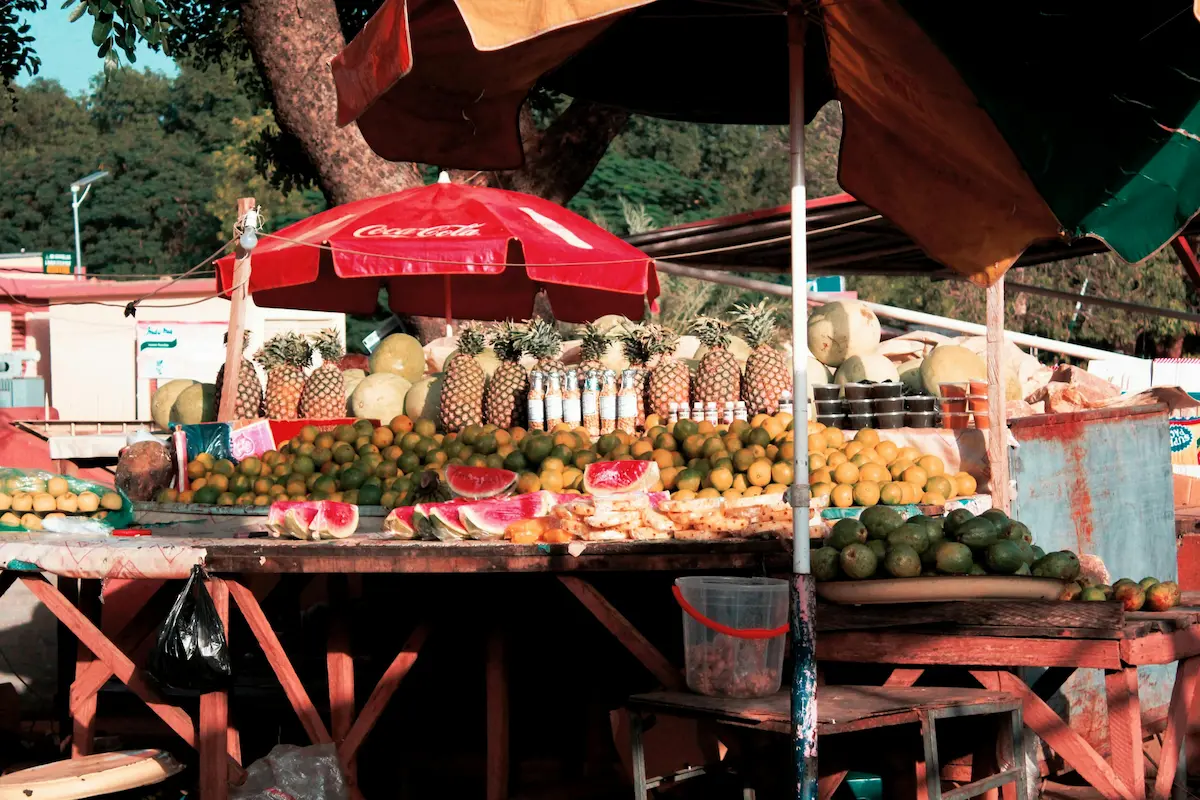
- a physical container such as a doorway, stall, or counter
- a repeated action that creates expectation
When you locate structure, you reduce uncertainty. You are no longer reacting to everything. You are waiting for something specific to happen in a specific place.
This is the difference between hoping for a moment and preparing for one.
The Stage Test: Can This Frame Support a Moment?
A simple way to evaluate structure is to ask whether the frame can support a moment.
A strong stage has three qualities:
- visual clarity
- defined boundaries
- space for change to occur
If nothing enters the frame, does it still feel coherent? If an ordinary person steps into the space, does the image still make sense?
If the answer is no, waiting will not improve it.
Photographers often wait for an “interesting” person to rescue a weak frame. This rarely works. If the environment cannot support a normal subject, it will not support a compelling one either.
Build the stage first. Then allow the subject to complete it.
The Core Decision: Wait, Move, or Leave
Every time you stop in an uncontrolled environment, you are making a decision, whether you recognise it or not.
There are only three valid options:
- Wait — hold position because a specific change is likely to occur
- Move — reposition to improve framing, distance, or clarity
- Leave — accept that the scene will not resolve
The most damaging habit is defaulting to waiting without justification.
Waiting only makes sense when you can clearly answer two questions:
- What exactly is missing?
- How likely is it to appear here?
If you cannot answer both, waiting becomes inertia rather than patience.
When Waiting Is the Right Choice
Waiting is appropriate when the environment is stable and the missing element is clear.
Examples include:
- a clean space where people regularly enter
- a transaction point with repeated interactions
- a light patch that remains consistent
- a predictable pause in movement
In these situations, you are not waiting for magic. You are waiting for completion.
The key is specificity. You should be able to describe the missing element in one sentence:
- “A person entering the light.”
- “A hand completing the exchange.”
- “A face turning toward the speaker.”
If you cannot name it, you are not waiting — you are stalling.
When Movement Solves the Problem
Movement is often the correct decision when the scene has potential but your position is wrong.
This includes situations where:
- the background is cluttered
- subjects overlap confusingly
- distance prevents you from reading expression
- the frame lacks separation
Moving does not mean abandoning the scene. It means changing your relationship to it.
In uncontrolled environments, repositioning often improves clarity more than waiting ever will.
The Hidden Cost of Staying Too Long
Waiting feels safe because it involves inaction.
But staying too long has consequences:
- you miss nearby opportunities
- your attention narrows
- you become emotionally invested in weak setups
- fatigue sets in and judgement deteriorates
This is why experienced photographers define exit conditions before they wait.
Without an exit, patience becomes attachment.
Exit Conditions: The Discipline That Saves Your Energy
One of the defining differences between productive waiting and wasted time is the presence of an exit condition.
An exit condition is a clear rule that tells you when to stop investing attention in a scene. Without one, waiting slowly turns into attachment, and attachment clouds judgement.
Exit conditions are not about giving up early. They are about preserving decision quality over time.
Common exit conditions include:
- a set number of people passing through the frame
- a specific amount of time without change
- a shift in light that removes structure
- the end of an interaction you were anticipating
When the exit condition is reached, you leave — even if part of you still hopes something might happen.
This discipline prevents the most common failure mode in uncontrolled environments: staying too long simply because you have already stayed.
Predictability Is the Real Advantage
Not all uncontrolled environments are equally unpredictable.
Some spaces have strong behavioural loops. People move through them in similar ways, repeat the same actions, and pause in the same locations. These patterns dramatically increase the odds that waiting will pay off.
Examples of high-predictability environments include:
- market stalls with repeated transactions
- cafés where customers approach and wait
- doorways and entrances
- commuter paths and crossings
- tourist viewpoints where people stop, look, and decide
Low-predictability environments — large open plazas, chaotic crowds, one-off street drama — often reward movement rather than waiting.
Learning to read predictability is more valuable than learning to react quickly.
Why Timing Is Usually About Transitions
When people talk about timing in photography, they often describe it as an instant.
In uncontrolled environments, timing is almost always about transition.
Meaningful moments usually occur at the point where something changes state:
- approach becomes pause
- attention becomes decision
- exchange becomes reaction
- movement becomes separation
By focusing on transitions rather than peaks, you stop chasing dramatic gestures and start anticipating quieter but more readable moments.
This is why experienced photographers often seem early rather than fast.
The Problem With Subject-First Thinking
In uncontrolled environments, many photographers default to subject-first thinking.
They scan for interesting faces, striking clothing, or unusual behaviour, hoping the subject itself will carry the image.
This approach is unreliable.
Interesting subjects appear briefly and unpredictably. Without a supportive environment, even compelling people produce weak frames.
A more consistent strategy is environment-first thinking:
- find a space that already works visually
- define where a subject could enter
- wait for someone to complete the frame
This approach shifts control back toward you, even when the environment itself is uncontrolled.
Emotional Signals as Diagnostic Tools
Your emotional state while shooting is a useful diagnostic signal.
A productive wait usually feels calm. You know what you are waiting for and why.
An unproductive wait often feels tense or restless. You are hoping rather than anticipating.
When you notice frustration building, it usually indicates one of three problems:
- the missing element is unclear
- the environment is not predictable enough
- an exit condition has not been defined
Recognising these signals early allows you to reset before judgement deteriorates.
Reviewing Decisions Instead of Images
Long-term improvement in photographing uncontrolled environments comes from reviewing decisions, not just outcomes.
After a shoot, look beyond which images worked and ask:
- Where did I wait without clarity?
- Where did movement improve the frame?
- Which scenes failed because I stayed too long?
- Which succeeded because I left early?
This kind of review builds pattern recognition rather than dependence on luck.
Consistency Comes From Reducing Chance
Uncontrolled environments will always involve uncertainty.
Consistency does not come from eliminating chance, but from reducing how much you rely on it.
You reduce reliance on chance by:
- prioritising structure
- anticipating transitions
- defining exit conditions
- choosing movement over hope
None of these require better equipment. All of them require better judgement.
What Actually Matters, Revisited
When photographing uncontrolled environments, what matters most is not control, speed, or confidence.
What matters is your ability to:
- recognise structure
- filter distractions
- anticipate change
- decide when to wait
- decide when to move
- decide when to leave
These decisions shape your work far more than any technical adjustment.
Closing: Control the Decisions You Can
Photographing uncontrolled environments will always feel demanding, because it requires constant judgement.
You cannot control people, light, or timing. You can control where you stand, what you wait for, and when you move on.
When you focus on those decisions, uncontrolled environments stop feeling hostile and start feeling readable.
That is where strong, consistent work is built.
Related reading:
Many of the decisions discussed here connect directly to the question of patience versus movement, which is explored in more detail in How Do You Decide When a Scene Is Worth Waiting For?
This idea of recognising structure and intent before reacting is expanded further in Seeing Before Shooting: Why Some Images Never Had a Chance, which looks at why certain frames fail before the shutter is ever pressed.